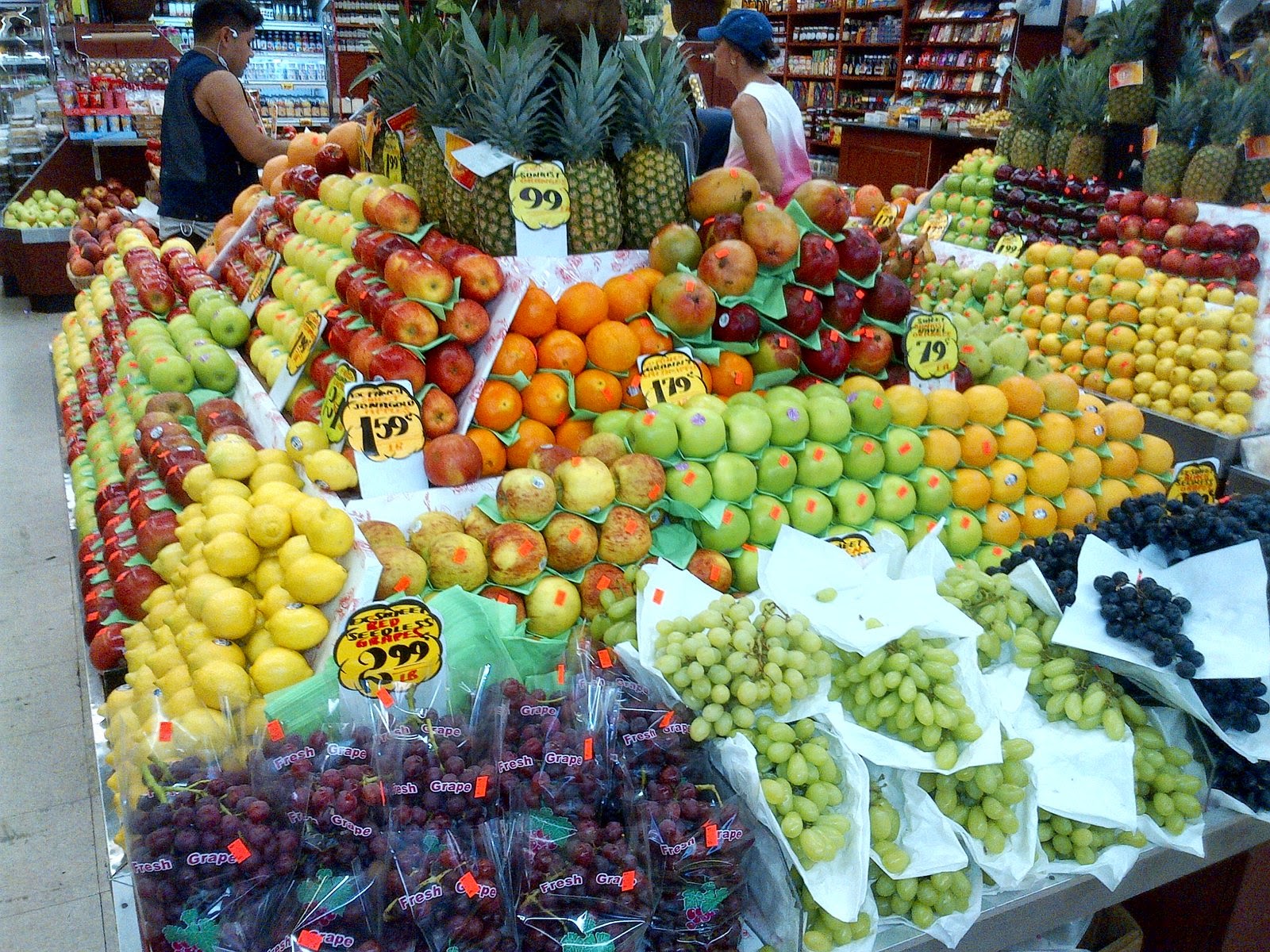
Thursday, September 19, 2013

What the heck is that? Purslane


One of the fun things you can do in the Union Square Greenmarket is snoop in chef’s shopping carts. Today I snooped in this cart. Sure enough - this seems like the norm this time of year - there was some purslane on top.


Let's go for the close-up:


Purslane is a chef’s darling, but to many folks it’s a weed. As horticulturalist Sandra Mason  writes, "Purslane, Portulaca oleracea, is probably in your garden right now, but not because you invited it to dinner."

Once you know what to look for, you'll find it, as I did, in a green patch around an urban traffic light and in a mall parking lot.


And don't think these purslane patches aren't here to stay! Purslane has made its way all over the world - not surprising, given purslane's legendary hardiness. As Mason notes,

Seeds of purslane have been known to stay viable for 40 years in the soil. You may find that fact either depressing or exciting... Purslane grows just about anywhere from fertile garden soil to the poorest arid soils. A rock driveway is nirvana to purslane... Again depressing or exciting. Running a tiller through purslane is called purslane multiplication.


I first encountered purslane as a desirable vegetable in Turkey, where it is prized in a variety of dishes - stews , meze appetizers, and salads. In New York, I frequently see it sold in the East Harlem vegetable stalls that cater to Mexican shoppers. And it's sold at many farmers' markets, where it is snapped up by chefs and a small but cultish following of laypeople. (And, occasionally, curious shoppers who interact with both groups.) This stand at a farmers' market is hoping to entice the uninitiated. 


So what's purslane's appeal? Of course, if you have a lot of it growing in your garden, by all means forage away. Purslane is extremely nutritious - in addition to being a good source of fiber, Vitamins A, B and C and several minerals and anti-oxidants, purslane has more Omega 3 fatty acids than any other leafy plant source. Chefs like it because it is a juicy succulent with an unusual tangy, almost lemony taste. Whenever I've seen someone buying purslane, I've asked them what they planned to do with it. Here are some of the responses: 

  • Mixed green salad
  • "Hide it in a sandwich for extra nutrition"
  • Chopped salad with tomatoes, cucumbers and onions
  • Salad with watermelon
  • Wilted, like spinach or other greens, underneath a hunk of protein
  • In a soup
  • "I'm Turkish, so with yogurt or with lamb"

Purslane does indeed go well with tomatoes - juiciness meets juiciness - and I was intrigued by the watermelon suggestion. Another juicy idea!


This combination was a winner! As it happened, this particular watermelon wasn't that impressive on its own, but as a salad ingredient it was aces. (As an aside, I'm always on the lookout for ideas for disappointing produce (check out some entries in the When Bad Produce Happens to Good People series on this blog), and treating a fruit as a salad vegetable often lowers the bar satisfactorily.)  A good addition to this salad would be something salty - olives, capers - or just some salt itself. 


The other idea that appealed to me was wilting the purslane. Purslane can get a little slimy if it's overcooked, so a light hand and quick cooking time are in order. You could saute some chopped garlic in oil first or proceed without it.


Sometimes I like to eat the tangled web of purslane with chopsticks.


One final tip: Purslane stems may be sold without their roots or with them.


If the roots are intact, expect clumps of sod too.


Give the purslane a soak and thorough hosing.

Give them a haircut too - no need for rat-tails here!


A couple of times I've pinched tip of what I assume is a purslane stem's seed head and planted it in one of my flower pots. The success of this plant plan is by no means guaranteed: I've killed a few "weeds" in my time - this year, a lovely pot of spearmint - so I don't know if this ever-propagating plant will visit me next year. If not, no big deal. That's what farmers' markets are for.

Wednesday, September 11, 2013

Purple Majesty at the Union Square Greenmarket


Fans of Prince and Alice Walker, rejoice! This is the season to celebrate the majestic results of blue-meets-red, aka Purple. 


In her essay, Color Meaning: Meaning of the Color Purple, Jennifer Bourn writes, 
The color purple is a rare occurring color in nature and as a result is often seen as having sacred meaning...Purple combines the calm stability of blue and the fierce energy of red. The color purple is often associated with royalty, nobility, luxury, power, and ambition. Purple also represents meanings of wealth, extravagance, creativity, wisdom, dignity, grandeur, devotion, peace, pride, mystery, independence, and magic.

Or it means lots of beauty and lots of anthocyanins.

Purple comes in many tones (this chart runs from Lavendar Mist to Dark Tyrian) - let's enjoy them all! This time of year the Union Square Farmers Market is positively awash in the color.


Sunday, August 25, 2013

A Day at the Beach

What does a beach have to do with produce? Everything - if the beach is Brighton Beach!

Brighton Beach is a Brooklyn neighborhood adjacent to the more famous Coney Island. In addition to its lovely and gorgeous mosaic beach (yes, the same South Shore of Long Island beaches that celebrities enjoy in The Hamptons), Brighton offers what New York Magazine called "arguably the most fascinating ethnic enclave in New York," an area in which several waves of Russian immigrants, initially Russian Jews in the 1970s and more recently a mix of Russian Jews and gentiles after the collapse of the Soviet Union, call home.

These are some of New York's most produce-loving people, as a stroll down the neighborhood's main drag, Brighton Beach Avenue, will reveal.


Some fruit vendors, particularly Fancy Farm (across the street from the Brighton Beach branch of the Brooklyn Public Library) are as fancy and beautifully arranged as any gourmet store.


Don't be surprised to see a sea of options, especially for produce items particularly beloved in the Russian community - three kinds of sour cherries, for example.


Does the number 99 contain mystical properties? Nah, these demanding shoppers just enjoy a good value.


Of course, the long Russian winter gives an appreciation for the need to preserve that bounty. Or maybe it's just that pickles are so tasty! Expect your vendor to carry a selection - pickled cucumbers, cabbage, tomatoes, etc.


Every now and then you'll see a sign that shows an appreciation for other produce items that wouldn't necessarily get as much love in another community.


Of course, Brighton Beach is still a beach! Not everyone is focusing on the produce. (And to be honest, once I'm on the beach, neither am I.)


Amazingly, this journey is readily accessible via the same subway lines that might take you to Central Park or Rockefeller Center. Or, in my case, home.


Monday, August 19, 2013

What the heck is that? Garlic scapes

Here’s another way to love garlic.


I first saw garlic scapes a few years ago. I was in Chinatown, and they were crowded among a whole heap of unknown and intriguing items. I was a little intimidated, so I kept to my shopping list and left them untouched. 

Flash forward a year or two, and I noticed them at the Union Square Greenmarket. This time the scapes were surrounded by familiar herbs, making them much more approachable. I decided to buy a bunch.

And so it began.  I was soon hooked.

What are garlic scapes? How do they fit into the scheme of what we typically consider "garlic"?

Garlic scapes are the leafless stems of hardneck garlic. From what I've been told, farmers traditionally cut back the stems in order to get the garlic plants to focus their energy on the garlic bulbs. One enterprising (or hungry) farmer must have grabbed some scapes off the compost pile and decided to cook with them. Viola! A cult was born. 

Or more likely, folks in the US noted that in Garlic Central, aka China, the world's leading producer and exporter of garlic, pretty much every bit of garlic is used. The blog Red Cook, which focuses on Chinese home cooking, tried to help out a reader confused by garlic scape nomenclature, since garlic scapes are sometimes called "garlic sprouts" or "garlic greens," noting,

There are many different parts of garlic available in Chinatown and they should all be labeled accordingly. Even in Chinese there are many different names. In northern China the name suan tai (蒜薹) is used most commonly for garlic scapes. But in the south suan xin (蒜芯) is used. But sometime suan miao (蒜苗) also refers to garlic scapes in spite of the fact that suan miao often refers to garlic greens, or the leaves. So I’m as confused as you are. I’m afraid you’ll have to look at the item itself. Garlic scapes are round solid stalks and usually have flower buds attached. Garlic greens are usually just the leaves with white parts at the bottom.

I hasten to add: Don't get discouraged! Work your way past the confusion! There are many great aspects to garlic scapes that will justify your investment of brain power and derring-do. Here are a few:


1) They are are beautiful singly and a little crazy looking when bunched into a bouquet, a Medusa-head, roller-coaster ride of flower bud and stalk. 

2) They taste like garlic, only a subtle and even herbal version of garlic. This makes them appealing to both garlic fanciers and more reticent fans.

3) They're really versatile! One idea: I've used my scapes, diced finely, in a cucumber salads, mixed green salads and bean salads - anywhere I might use scallions. But wait, there's more!


4) The number one use among shoppers at the Union Square Greenmarket (and not just because of the suggestion below): garlic scape pesto. One shopper said she freezes several containers' worth.


5) Scapes are a nice addition to stir fries.

6) Soups, dips, sandwich enhancers - just let your imagination run wild.

7)  My favorite way: pop a few on a skillet and grill for a few minutes. Sprinkle lightly with salt. Totally addictive. 


But do not tarry! The season is short. Before too long your request for scapes will get you only a sorrowful look and a tip to try again next year.

Tuesday, August 13, 2013

What the heck is that? Donut peaches

Could donut peaches bridge the donut - produce divide?


I am a strong believer in Produce Proselytizing - showing folks how delicious and delightful produce can be. But I know that it's hard to convince people who are accustomed to eating donuts (or other members of the notorious Salt-Sugar-Fat trinity) that they might like some fresh fruit as well. Produce Proselytizing faces a couple of widely acknowledged challenges - access, cost, habit, etc. - and one that isn't discussed as frequently: most junk food has a consistent taste but agricultural products are much more variable in quality.


"I know I can count on an Oreo," a friend's husband told me recently. "An Oreo is always good! Cantaloupe is another story. Sure, I've had some good cantaloupe, but can you guarantee that the next cantaloupe will be just as good? I didn't think so." 


Of course I've had some bad produce. So much, in fact, I've tried to formulate solutions in those circumstances When Bad Produce Happens to Good People. Those experiences haven't broken my stride much, but I do sometimes wish for a consistently wonderful fruit for those a bit more wobbly in their faith.

Enter the donut peach, one of the surest things in the produce world I've experienced thus far.

Donut peaches, aka Saturn peaches, aka Galaxy peaches, aka UFO peaches, aka bagel peaches, are white-flesh peaches with flattened shapes. This unusual profile is said to resemble a donut, the rings of Saturn, a bagel or a UFO. Ya gotta have a gimmick! 


We mean no harm to your Galaxi 


Beyond the amusing names, what I have found intriguing about donut peaches is how consistently great they are. They're very sweet and lower in acid than other peaches. I can't recall ever having a mealy one. 

Donut peaches are a supermarket's dream (flat = stackable) but the variety isn't a recent lab development. They've been grown in China since the 19th century. 

Donut peaches are on the small side (very appealing for kids) and they have a tiny pit that sidesteps one of regular peaches' potentially annoying attributes: the problematic pit. Clingstone peach pits do just what their name implies - cling to the flesh that irritates some people. Freestone pits avoid those separation issues, but sometimes the pit halves separate from each other as well, leaving bits of hard shell amid the peach flesh, or exposing the interstices of the seed and seed debris in a way that repulses some eaters. Donut peaches' pits stay tightly closed but don't cling to the flesh: the best of both worlds.


Little donut peach pits vs. big peach pit


After buying several donut peaches at the farmers' market (and then going back and buying more), I did a bit of research and discovered that donut peaches are wonderful to grow, too.  Mother Earth News noted that donut peaches are easier to grow than many varieties (highly pest resistant and producers of unusually abundant harvests) and have particularly beautiful blossoms.  This seed catalog describes "small, fast-growing trees so attractive they'd be valuable even without the fruit." 

Hmmm, sounds like an opportunity for some garden proselytizing...